


[3D Printing] Interview with Tao Ye, CEO of Tuozhu – Why H2C is the ultimate machine for lazy entrepreneurs
On Tuesday, November 18, 2025, at 3 p.m., Bambu Lab almost completely occupied part of Hall 12.1 at the Formnext trade show. The countdown clock ticked, and several machines were covered up, creating a tense atmosphere, before Cedric Mallet, CEO of Bambu Lab Europe, unveiled the company's new H2C 3D printer.
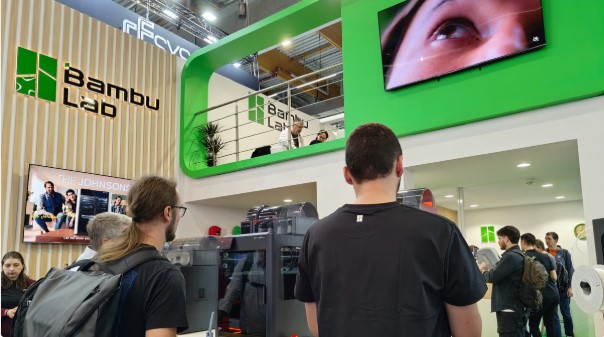
A few days later, as the exhibition concluded, interviewer Matthew Mensley visited the media lounge at Bambu Lab's two-story booth for an in-depth conversation with co-founder and CEO Tao Ye. This company has now achieved a pivotal position in the industry. They are changing the landscape of 3D printing machinery, even dominating seemingly unlikely competitors.
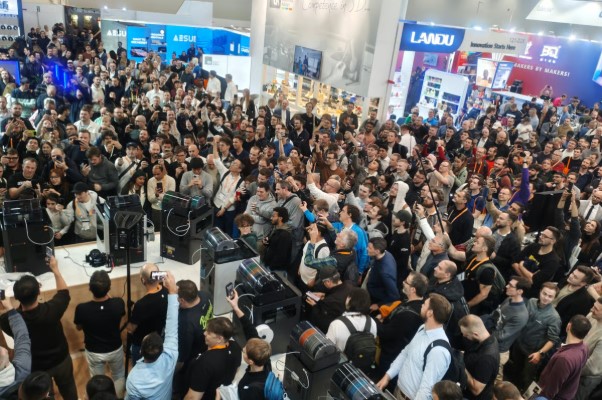
But Tao doesn't seem to care about these outside opinions. "We are a vision-driven company... We believe that 3D printing or personalized manufacturing can have a huge impact on the world, and we hope to have millions of customers—the general public. Rather than focusing on providing solutions for specific vertical industries, we hope to create greater added value here."
H2C's most remarkable feature is its ability to replace one of its two nozzles with five spare nozzles as needed, enabling near-zero-waste printing on up to seven materials . "The smoothness of the entire nozzle-changing process exceeded my expectations. Even I sometimes find myself staring at it for a long time without realizing it."
H2C is the culmination of three years of research, design, and engineering, designed to solve a problem that Bambu Lab had long foreseen: "You immediately realize the limitations of single-nozzle solutions, especially in multi-color printing—everyone feels heartbroken and guilty about wasting so much plastic. Even before we completed the X1C project, we started brainstorming ways to solve this problem."
"For H2C, despite investing more engineers in R&D, it still took 36 months to finally complete." Two out of the three years later, the company had hundreds of machines in operation and printing, but even so, it still took us some time to see Vortek. Quality standards and process optimization were considered to be the reasons for the delay. Tao Ye said with a smile that this was "actually a euphemism for 'delay'."
H2C made its debut at Formnext, showcasing three compelling and competing multi-material printing solutions: H2C, employing a Vortek nozzle-changing mechanism where nozzles share a filament path fed by the AMS device; Prusa's upcoming Core One machine's INDX upgrade, using similar induction-heated nozzles but with independent INDX paths, a combination of tool-changing and a more traditional approach; and the U1, which employs a near-complete tool-head changing method.
Together, they represent an exciting era for consumer desktop 3D printing. "They're everywhere. That's what makes this industry—competitive—fun and inspiring. We've never been sure [Vortek] is the best—I don't think anyone can definitively say right now, and the industry is constantly evolving. You're always discovering new pros and cons of every solution, and ultimately only customers and time will prove which is the best choice."
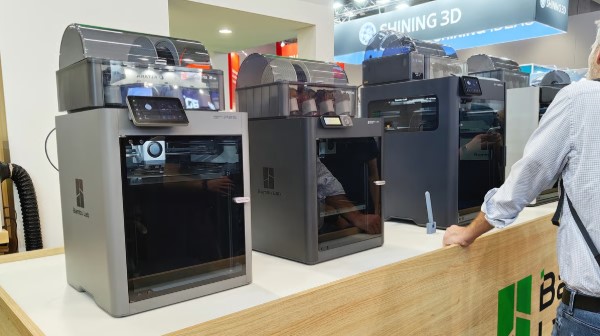
Given earlier reports indicating that nozzle replacement speeds weren't as rapid as expected, Tao's response didn't inspire much confidence in any major improvements to come. "There's always room for improvement, but that doesn't mean the room for improvement is unlimited. You can only push it to a certain limit." Considering this, and the "delays" in optimization, I can't help but wonder if what we're seeing now is the final version. Judging from its development timeline, Bambu Labs seems to be fully focused on developing a replacement for Vortek. To be fair, I've used this system at the All3DP lab, and considering the rigid limitation of Vortek's shared consumable path for all nozzles, its speed seemed quite good to me.
While people talk about how multicolor printing can save on materials, the frequent nozzle changes during printing may be overlooking the true purpose of the H2C as a lazy person's 3D printer. "I think I'm a typical user of Bambu Labs," Tao explained. "I basically throw everything from my computer or phone onto this printer—sometimes for very simple tasks, sometimes I want to print a Hueforge model with a 0.2mm nozzle."
Beyond specific hardware, Bambu Lab's influence is ubiquitous. Informal conversations with key figures in larger, more industry-focused companies inevitably lead to discussions about Bambu Lab and its achievements.
Meanwhile, emerging Chinese tech companies, as usual, have raised concerns. Some see them as the elephant in the room: security issues. But for Bambu Lab, this is an artificial argument. "Of course, some vertical industries have found our printers useful, and we're happy they've adapted and used them," but ultimately, the company positions itself as a consumer brand, committed to creating the highest quality mass-market products.
Bambu Labs' explanation for its machine security is simple: "I think if you really focus on the facts—not guesses, predictions, or assumptions—you'll find we have a very good track record. Yes, firmware issues have certainly caused a lot of controversy, but that's all based on assumptions. You know, 'Bambu might do something in the future.'"
"I don't like the idea that 'Bambu Lab is evil because it might do something bad in the future'—any electronics manufacturer could face that risk; Apple might do something bad to you. Google might too." The company's point—a statement that resonated strongly with the three people in the room—was, "Considering we've sold millions of printers, if there really is a problem, why hasn't anyone revealed it yet?"
Expanding the discussion beyond 3D printing to include the obstacles faced by Chinese electronics and infrastructure companies at the government level—a particularly relevant point given Mr. Tao's key role in DJI's rise in the drone industry—the company's strategy is clear: focus on making quality products and let consumers speak for themselves. "I think third-party certification is more convincing. They have the expertise to judge and review everything. I think that's the path we should take."
Finally, he concluded, "It's not up to us, is it? We can only try our best to be trustworthy; everything else is beyond our control."
Want to learn more about Bambu Lab H2C products? Contact us below!
-Contact Us-
SanDiMa offers more than just 3D printing ; we provide three major OEM services: " 3D Printing Manufacturing ," " 3D Scanning Services ," and " Spatial 3D Scanning Services "!
Follow our fan page and stay up-to-date with the latest news:
Facebook | Instagram | T hreads
References